
Archie Gemmill: Biography, Career, Age, Family and Legacy
Scotland’s Football Hero, World Cup Star and Lasting Legend
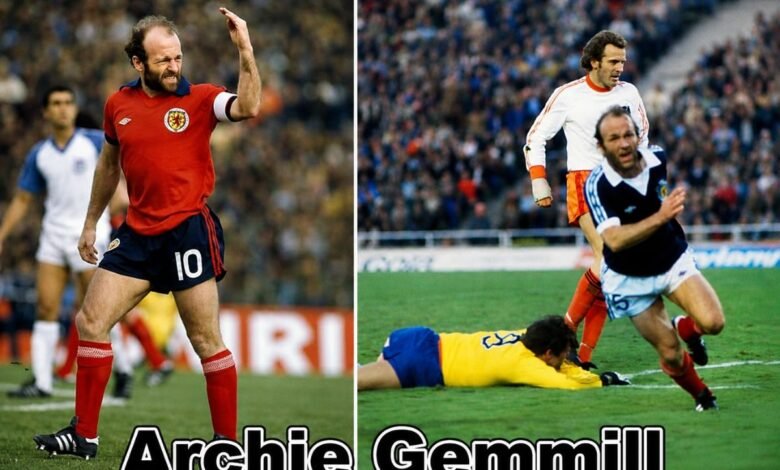
Introduction
Archie Gemmill is one of Scotland’s most memorable footballers, remembered for his tireless midfield performances, remarkable career at the top of English football, and one extraordinary goal at the 1978 FIFA World Cup. Although he was relatively short for a professional footballer, his energy, courage, technical ability, and determination made him a formidable opponent.
Born in Paisley, Scotland, Gemmill developed from a promising young player into a highly decorated midfielder. He won major domestic honours with Derby County and Nottingham Forest and represented Scotland at international level. His career also brought him into the orbit of legendary manager Brian Clough.
For many supporters, however, his defining moment came against the Netherlands in 1978. His brilliant solo goal remains one of the most celebrated moments in Scottish football history and has helped ensure that his name continues to be recognised by generations of fans.
Quick Facts About Archie Gemmill
| Fact | Details |
|---|---|
| Full Name | Archibald Gemmill |
| Known As | Archie Gemmill |
| Date of Birth | 24 March 1947 |
| Birthplace | Paisley, Scotland |
| Nationality | Scottish |
| Profession | Former Professional Footballer and Coach |
| Position | Midfielder |
| Scotland Caps | 43 |
| Scotland Goals | 8 |
| Famous Moment | 1978 World Cup goal against the Netherlands |
| Major Clubs | St Mirren, Preston North End, Derby County, Nottingham Forest, Birmingham City |
| Son | Scot Gemmill |
| Playing Career | 1960s–1980s |
Early Life and Background
Archibald Gemmill was born on 24 March 1947 in Paisley, Scotland. Growing up in a country with a strong football culture, he developed an early passion for the game and began working towards a professional career.
Gemmill did not have the imposing physical frame often associated with elite footballers. Instead, he developed his game around movement, technique, stamina, determination, and an ability to understand what was happening around him on the pitch.
His early development eventually led him to St Mirren, where he began his senior professional career. His performances quickly showed that he had the character and ability to progress beyond Scottish football.
His time at St Mirren was particularly notable because he became associated with an important moment in Scottish football history. In 1966, he was used as a tactical substitute, an unusual development at the time.
That experience helped introduce Gemmill to a wider footballing audience and gave him an important foundation for the years ahead.
Her Age and Physical Features
As of 2026, Archie Gemmill is 79 years old. He was born in 1947 and belongs to a generation of footballers who competed during a very different era from today’s highly commercialised game.
During his playing career, Gemmill was known for his relatively small stature. He stood at approximately 5 feet 5 inches (165 cm), making him one of the smaller players on many professional pitches.
However, his height never prevented him from competing at the highest level. His low centre of gravity helped him maintain balance while dribbling, while his quick movement made him difficult for defenders to contain.
Rather than relying on physical size, he used intelligence, persistence, close control, and stamina. His career became a strong example of how technical ability and determination can overcome physical disadvantages in sport.
Career and Major Achievements
Gemmill began with St Mirren before moving to Preston North End in 1967. His major breakthrough came after joining Derby County in 1970, where Brian Clough helped make him an important part of a highly successful team.
At Derby, Gemmill won the English First Division title in 1971–72 and again in 1974–75. He later joined Nottingham Forest, winning another league championship in 1977–78 and the European Cup in 1979.
He also played for Birmingham City before finishing his playing career with later involvement at Wigan Athletic and Derby County. For Scotland, he earned 43 caps and scored eight goals.
The 1978 World Cup Goal
The moment that transformed Gemmill into a permanent figure in Scottish football folklore came during the 1978 World Cup in Argentina.
Scotland faced the Netherlands in a crucial group match and needed a remarkable result to keep their hopes alive. The Dutch were one of the strongest teams in the tournament, but Scotland produced a memorable performance.
In the second half, Gemmill collected the ball and embarked on a brilliant individual run. He moved beyond Dutch defenders with quick touches and clever changes of direction before calmly lifting the ball over goalkeeper Jan Jongbloed.
The goal gave Scotland a 3–1 advantage and became an instant classic.
Scotland eventually won the match 3–2, although the result was not enough to take the team through to the next stage. Despite that disappointment, Gemmill’s goal survived as one of the most celebrated individual moments in Scottish football.
The strike was later referenced in the 1996 film Trainspotting, further extending its cultural influence beyond football.
International Career With Scotland
Gemmill represented Scotland for more than a decade, earning 43 international caps between 1971 and 1981.
He scored eight goals for his country and was trusted with the captain’s armband on numerous occasions. His leadership qualities were particularly valuable in a period when Scottish football produced several talented and highly competitive players.
The 1978 World Cup naturally became the defining chapter of his international career. Even though Scotland did not advance as supporters hoped, Gemmill’s performance against the Netherlands gave the tournament a lasting place in Scottish sporting memory.
His contribution to the national team was about more than one goal. He brought experience, energy, discipline, and determination to Scotland’s midfield.
Relationship With Brian Clough
One of the most important professional relationships in Gemmill’s career was with Brian Clough.
Clough signed him for Derby County in 1970 and later reunited with him at Nottingham Forest. Their relationship became an important part of Gemmill’s success because Clough recognised qualities in the midfielder that made him highly effective despite his modest physical stature.
Under Clough, Gemmill became a league champion with Derby and later helped Nottingham Forest achieve remarkable domestic and European success.
The partnership demonstrated how the right manager can bring out the best in a player’s abilities. Clough valued Gemmill’s intelligence, competitive nature, and willingness to work for the team.
Marriage and Family Life
Gemmill has generally kept much of his private family life away from the public spotlight. Unlike many modern football personalities, his career was built before social media transformed the relationship between professional athletes and the public.
The most publicly recognised part of his family story is his son, Scot Gemmill, who followed his father into professional football.
Scot enjoyed a successful playing career of his own and represented Scotland before moving into coaching. He later became closely involved with Scotland’s youth football structures.
The careers of father and son have therefore created a notable footballing legacy across two generations. Both contributed to Scottish football as players and coaches.
Who Is Archie Gemmill?
Archie Gemmill is a former Scottish professional footballer best known for playing as a midfielder and scoring his famous goal against the Netherlands at the 1978 World Cup.
However, describing him only through that goal would overlook a highly successful club career.
He was a key player for Derby County during two First Division title-winning campaigns and later helped Nottingham Forest win the league and European Cup.
His career combined domestic trophies, international football, leadership, and coaching. That combination explains why he remains an important figure in the history of Scottish football.
Personality and Interests
Gemmill’s playing personality was built around determination and competitiveness. He was known for giving maximum effort, covering ground, challenging opponents, and contributing to different phases of play.
His relatively small frame arguably made his competitive qualities even more impressive. He refused to allow physical limitations to define the way he played.
After retirement, his continued involvement in coaching reflected his long-term connection with football. Working with younger players allowed him to share the lessons he had learned during a career at the highest level.
His approach to the sport has contributed to his image as a hard-working and committed football professional rather than simply a player remembered for one spectacular moment.
Social Media Presence
Gemmill began his career long before social media existed, so he does not have the same digital footprint as today’s football stars.
There is considerable online interest in his career, particularly around the 1978 World Cup goal. Video clips, historical football features, interviews, and discussions about Scotland’s greatest football moments continue to keep his name visible online.
The continued popularity of his famous goal demonstrates how older sporting moments can remain relevant in the digital age.
Net Worth and Income
There is no reliably verified public figure for Archie Gemmill’s current net worth. Because of that, it would be misleading to present a specific amount as fact.
During his playing career, his primary income came from professional football contracts. He later worked in coaching and football development, providing another professional source of income.
It is also important to remember that football finances were very different during Gemmill’s playing era. Players from the 1970s generally earned considerably less than the global stars of modern football.
Therefore, estimates of his present wealth should be treated cautiously unless supported by reliable financial documentation.
Public Image and Legacy
Gemmill’s public image has remained remarkably positive because his career combines achievement with an unforgettable sporting moment.
His World Cup goal is regularly discussed whenever Scotland’s greatest football moments are considered. It has become part of the country’s sporting identity and is remembered by supporters who watched it live as well as younger generations who discovered it through recordings.
His success with Derby County and Nottingham Forest also gives his career substantial historical importance. He was not simply a one-tournament hero; he was a midfielder who won major trophies at club level.
His connection with Brian Clough, his international career, and his later coaching work all add depth to his legacy.
Perhaps the most enduring lesson from his career is that physical stature does not determine footballing greatness. Gemmill’s height was modest, but his influence was anything but small.
Archie Gemmill’s Lasting Impact on Scottish Football
Few Scottish footballers have produced a moment as instantly recognisable as Gemmill’s goal against the Netherlands.
The image of him dribbling through defenders and finishing with a delicate chip has been preserved in countless football compilations and historical discussions.
Its significance goes beyond technical quality. The goal came during a crucial World Cup match and briefly gave Scotland supporters hope of achieving something extraordinary.
That emotional connection is one reason the moment has remained powerful for so many years.
Gemmill also represents an important generation of Scottish footballers who competed successfully in the English top flight. His achievements helped demonstrate the quality of Scottish talent on the international stage.
Conclusion
Archie Gemmill’s story is much bigger than one famous World Cup goal. From his beginnings in Scottish football to league triumphs with Derby County and Nottingham Forest, he built a career based on hard work, intelligence, technical ability, and determination.
His 43 Scotland caps, domestic titles, European success, and later coaching career all contribute to a remarkable football legacy. Yet his extraordinary strike against the Netherlands in 1978 remains the image most closely associated with his name.
At 79, Gemmill remains an enduring figure in Scottish football history. His career continues to remind fans that greatness is not measured by height or physical appearance, but by skill, character, courage, and the ability to create moments that live forever.
Frequently Asked Questions About Archie Gemmill
1. Who is Archie Gemmill?
Archie Gemmill is a Scottish former professional footballer and coach who played mainly as a midfielder. He is particularly famous for his 1978 World Cup goal against the Netherlands.
2. How old is Archie Gemmill?
Archie Gemmill was born on 24 March 1947. As of 2026, he is 79 years old.
3. What was Archie Gemmill’s most famous goal?
His most famous goal came against the Netherlands during the 1978 FIFA World Cup. He dribbled past several defenders before chipping the goalkeeper.
4. How many caps did Archie Gemmill have for Scotland?
Gemmill made 43 appearances for Scotland and scored eight international goals.
5. Which clubs did Archie Gemmill play for?
His professional career included St Mirren, Preston North End, Derby County, Nottingham Forest, Birmingham City, and later playing or coaching involvement with Wigan Athletic and Derby.
6. Did Archie Gemmill win the European Cup?
Yes. He was part of the Nottingham Forest team that won the European Cup in 1979.
7. Is Scot Gemmill Archie Gemmill’s son?
Yes. Scot Gemmill is his son. Scot also became a professional footballer and later worked as a coach within Scottish football.
8. Why is Archie Gemmill’s World Cup goal so famous?
The goal is famous because of Gemmill’s outstanding individual dribbling and finish, the importance of the match, and its lasting place in Scottish football culture. Its later appearance in popular culture also helped preserve its reputation.